Agrivoltaics (Solar Farming)
Keep your land in agricultural production and generate clean energy from the same field. Agrivoltaics is solar farming that works with your farm, not instead of it.
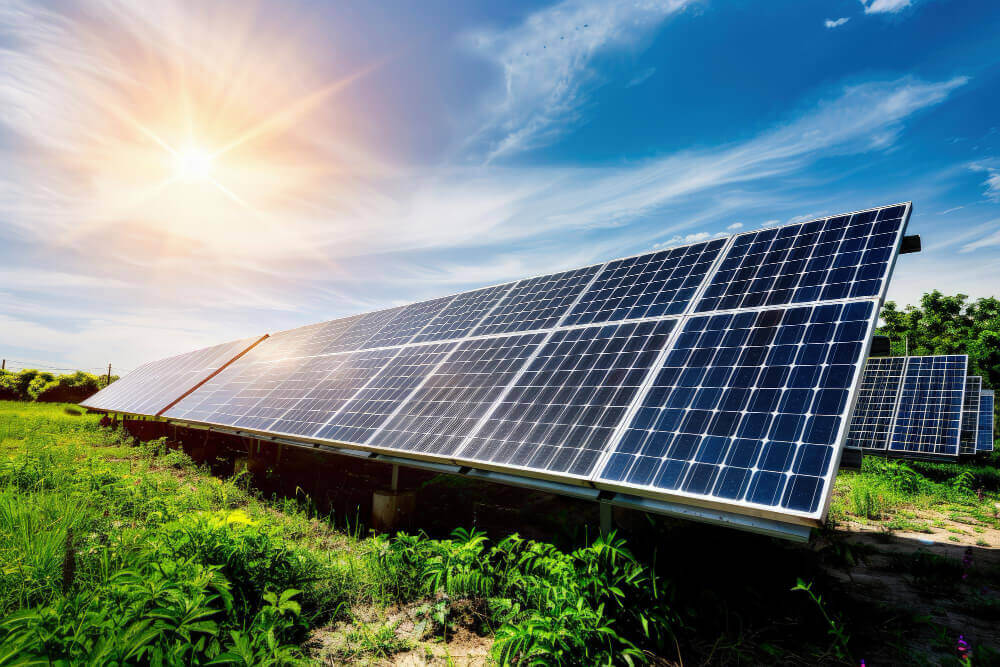
Agrivoltaics — sometimes called agri-solar or solar farming — combines crop or livestock production with solar generation on the same parcel of land. Raised or spaced panel arrays let sheep graze beneath them, allow shade-tolerant crops to grow between rows, and keep the soil in active agricultural use while the array earns a second income.
For many farmers this is the most attractive option of all: the land stays farming, you retain your agricultural status and subsidies where eligible, and the solar income sits on top. We design agrivoltaic layouts around your rotation, your stock and your machinery access.
Why it works
- Land remains in genuine agricultural use alongside generation
- Shade and shelter can benefit livestock welfare and some crops
- Reduced soil moisture loss in dry spells beneath the panels
- Diversified income without taking fields entirely out of production
- Layouts designed around your grazing, cropping and access needs
Our process, step by step
Farm & field review
We look at your rotation, stock and how each field is used today to find where agrivoltaics fits best.
Co-design the layout
Panel height, row spacing and access are designed so machinery and animals can still work the land.
Consent & build
We secure planning and build the array, with grazing or cropping plans agreed in writing.
Farm and generate
You continue to farm beneath and between the panels while the array generates an additional income.
Frequently asked questions
Can I still claim agricultural support on agrivoltaic land?
In many cases yes, because the land remains in agricultural use, but eligibility depends on current scheme rules and the specific design. We help you understand the position before you commit.
What can grow or graze under the panels?
Sheep grazing is the most common, and works very well. Grass, certain forage crops and shade-tolerant horticulture can also be grown depending on the array height and spacing.
Does agrivoltaics earn less than a full solar farm?
Generation density can be lower than a conventional solar farm, but you keep the agricultural income too. We model both options so you can compare total returns.
Is the soil protected?
Yes. Spaced layouts maintain ground cover and the soil stays in use, which helps preserve its structure and condition over the lease term.
Find out what your land could earn
Send us your location and acreage and we'll come back with an honest, no-obligation assessment of your site's solar potential — usually within two working days.
Request a Free Land Review