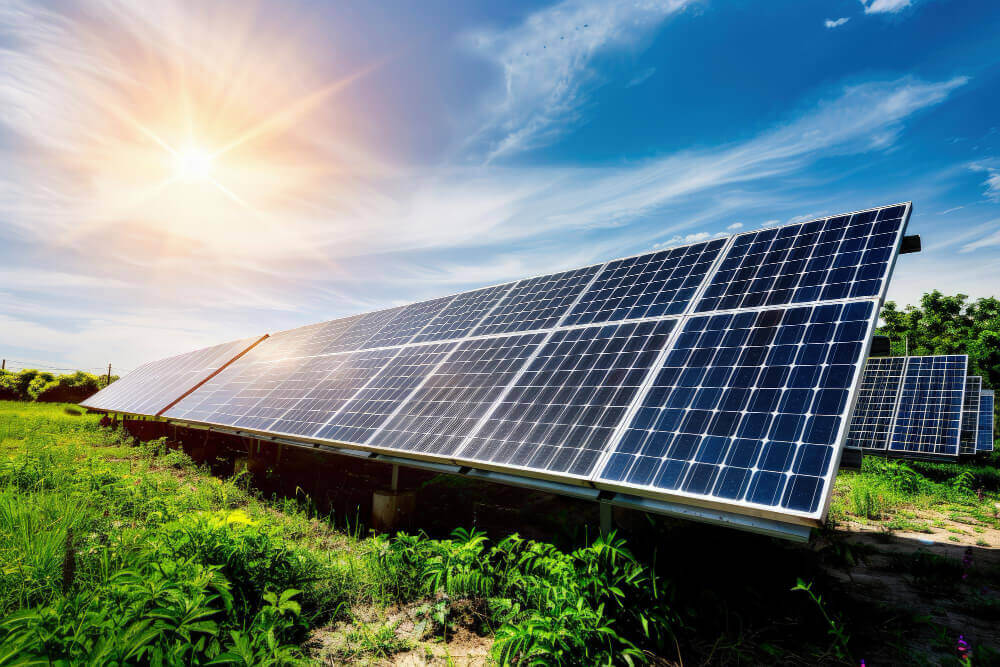
Sheep Grazing Under Solar Panels
How sheep grazing works on solar farms: the benefits for flock and land, why it is the UK's most common agrivoltaic system, and what it means for graziers.
Sheep grazing beneath solar panels is the most established form of agrivoltaics in the UK. It keeps land in livestock production, controls vegetation naturally, and provides shelter for the flock — a genuine win for farming and energy alike.
This guide explains how solar grazing works and why it suits British sheep farming so well.
Why sheep and solar work together
Solar farms need their grass kept short to prevent shading and maintain access. Sheep do exactly that, replacing mowing with grazing. In return the flock gains shelter from sun, wind and rain beneath the panels, and access to managed, often species-rich pasture.
- Natural vegetation control — less mowing, lower site costs.
- Shelter for ewes and lambs from weather extremes.
- Continued livestock income alongside the solar lease.
- Diverse swards that can improve flock health.
- Land stays in genuine agricultural use.
Designing a site for grazing
Panels are set at a height and spacing that let sheep move and graze freely underneath. Water, handling and access are planned in, and fencing keeps stock secure. Cattle are generally not grazed on solar sites because of their size, but sheep are an ideal fit.
What it means for graziers
For sheep farmers without enough land of their own, solar sites can offer additional managed grazing. For landowners, retaining a grazier keeps the land farmed and the swards healthy. Many schemes are designed from the outset around continued grazing.
Frequently asked questions
Can sheep really graze under solar panels?
Yes — it is the most common agrivoltaic system in the UK. Panels are spaced and raised so sheep graze freely beneath and between the rows.
Are the panels safe for livestock?
Yes. Cabling is protected and out of reach, and sites are designed with animal welfare in mind. Sheep typically settle quickly and use the panels for shelter.
Can I keep my own flock on the site?
Often yes, or a local grazier can be brought in. Grazing arrangements are agreed as part of the scheme design.
Why sheep and not cattle?
Sheep are the right size to move safely beneath standard panel arrays. Cattle are generally too large, though sites can occasionally be designed with raised structures for other stock.
Find out what your land could earn
Send us your location and acreage and we'll come back with an honest, no-obligation assessment of your site's solar potential — usually within two working days.
Request a Free Land Review