What Is Agrivoltaics?
Agrivoltaics explained: how farms combine solar energy and food production on the same land, the main system types, and what it means for UK landowners.
Agrivoltaics — also called agri-solar, agrisolar or simply solar farming — is the practice of producing food and solar electricity from the same piece of land at the same time. Instead of choosing between farming and energy, the land does both.
For UK farmers and landowners, agrivoltaics offers a way to diversify income while keeping ground in genuine agricultural use. Done well, it can improve resilience to drought, shelter livestock and provide a stable, weather-independent revenue stream alongside the harvest.
How agrivoltaics works
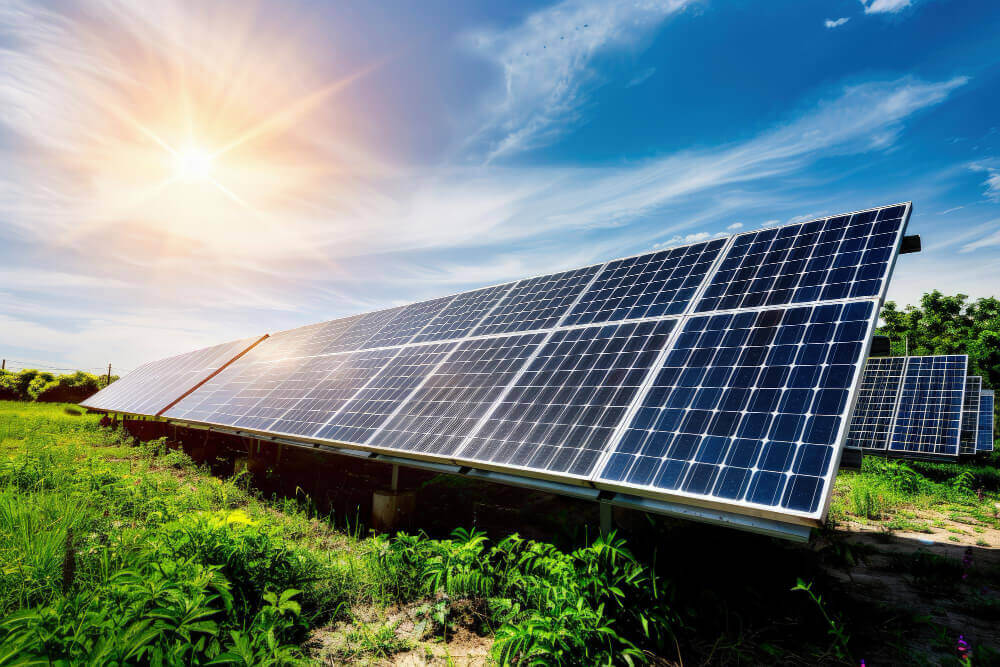
Solar panels are mounted on raised frames or spaced rows that leave room beneath and between them for crops or grazing animals. The panels generate electricity that is fed to the grid or used on-site, while the land below continues to produce.
The key design challenge is sharing sunlight sensibly. Panels are spaced, tilted or elevated so that enough light reaches the ground for plants or pasture, while still capturing a strong solar yield above.
The main types of agrivoltaic system
There is no single way to build an agrivoltaic site. The right approach depends on what you farm, your climate and your goals.
- Grazing systems — sheep (and sometimes poultry) graze beneath and around standard ground-mounted rows, keeping vegetation down and the land in livestock use.
- Elevated / overhead arrays — panels raised on tall frames so machinery and crops can pass underneath, common for arable and horticulture.
- Spaced-row crop systems — wider gaps between panel rows let combinable or row crops grow between them.
- Horticulture & soft fruit — semi-transparent or carefully spaced panels shelter high-value crops from hail, heat and excess sun.
Benefits for farmers and the land
Beyond the income, well-designed agrivoltaics can bring agronomic advantages. Partial shade reduces water loss in hot spells, panels offer shelter for livestock, and the mix of generation and grazing can support biodiversity through managed margins and wildflower planting.
Crucially, the land stays farmed. That matters for farm identity, for succession, and increasingly for how planning authorities and the public view solar development.
Frequently asked questions
Is agrivoltaics allowed in the UK?
Yes. Agrivoltaic schemes are developed in the UK under the normal planning system, and keeping land in agricultural use can strengthen a planning case. Each site is assessed on its merits.
Does farming under panels reduce the solar output?
Spacing panels for agriculture slightly reduces the density of generation per hectare compared with a conventional solar farm, but the combined value of energy plus continued farming is often higher overall.
Can I still claim agricultural support payments?
In many cases land under an agrivoltaic scheme remains eligible because it stays in agricultural production, but eligibility depends on current scheme rules. We always recommend checking your specific situation.
What can I grow or graze under solar panels?
Sheep grazing is the most common in the UK, but spaced and elevated systems also suit grass, forage, some arable crops, soft fruit and horticulture. We help match the system to your farm.

Find out what your land could earn
Send us your location and acreage and we'll come back with an honest, no-obligation assessment of your site's solar potential — usually within two working days.
Request a Free Land Review