
Solar Farms vs Traditional Farming
A balanced comparison of leasing land for solar versus continuing traditional farming — income stability, land use, risk and the middle path of agrivoltaics.
Choosing between traditional farming and solar is rarely all-or-nothing. Most landowners lease only part of their holding for solar and continue farming the rest — and agrivoltaics can keep a field doing both.
This guide sets out an honest comparison so you can weigh the options for your own land.
Income: stability versus the harvest
Traditional farm income rises and falls with yields, input costs, weather and commodity prices. A solar lease, by contrast, provides a fixed, index-linked rent that arrives whatever the season brings. Many farmers use that stability to underpin the rest of the business.
Land use and productivity
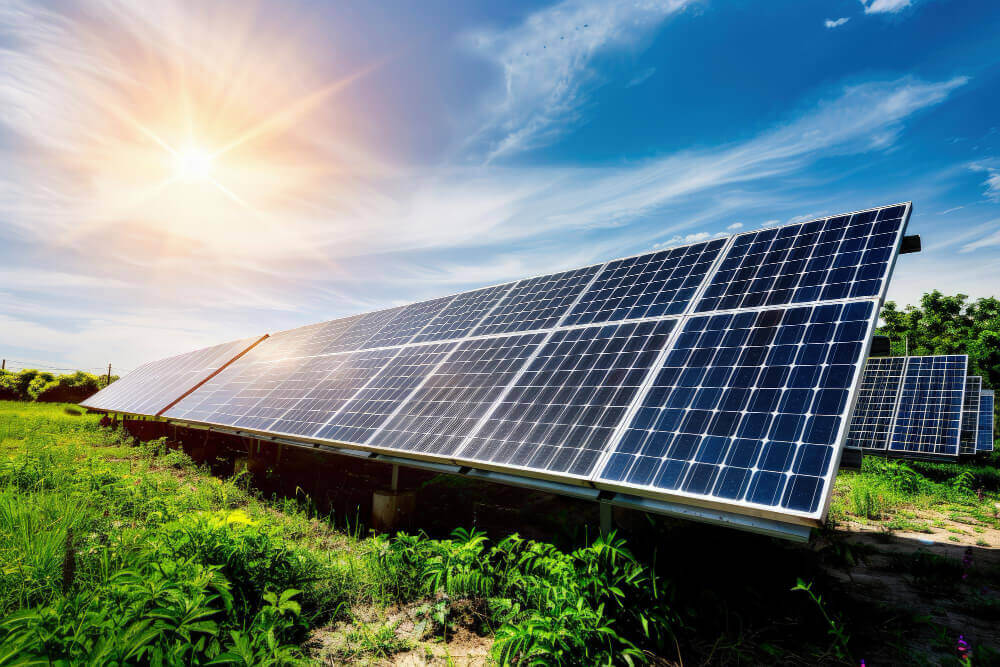
Conventional farming keeps all land in food production. A standard solar farm changes the use of the leased area for the lease term, though grazing and biodiversity management often continue. Agrivoltaics sits between the two, keeping ground in agricultural use while adding generation.
Risk, effort and the long view
Farming carries ongoing operational risk and demands continuous labour and investment. A solar lease shifts the technology and market risk to the developer and frees up management time. Set against that, a lease ties up the land for decades, so break clauses, rent reviews and decommissioning terms matter.
- Traditional farming: full control, full risk, variable income, land stays in food production.
- Solar lease: fixed income, low effort, long commitment, change of use on the leased area.
- Agrivoltaics: a middle path — keep farming and add solar income from the same field.
Frequently asked questions
Is it better to farm or lease for solar?
Neither is universally better. It depends on your land quality, finances and goals. Many landowners do both — leasing weaker fields for solar while farming the best ground.
Will I lose my best farmland to solar?
Good schemes are usually directed towards lower-grade or marginal land. We assess land quality early and will tell you honestly if a field is better kept in production.
Can I farm again after the lease ends?
Yes. Solar is a reversible land use. At the end of the lease the equipment is removed and the land restored to agricultural condition.
Does solar pay more than farming the same land?
On marginal land a solar rent often exceeds the margin from farming it, with far less risk. On high-grade arable the picture is more balanced. A feasibility review gives you the figures for your site.
Related guides
Find out what your land could earn
Send us your location and acreage and we'll come back with an honest, no-obligation assessment of your site's solar potential — usually within two working days.
Request a Free Land Review